


RTI Commission
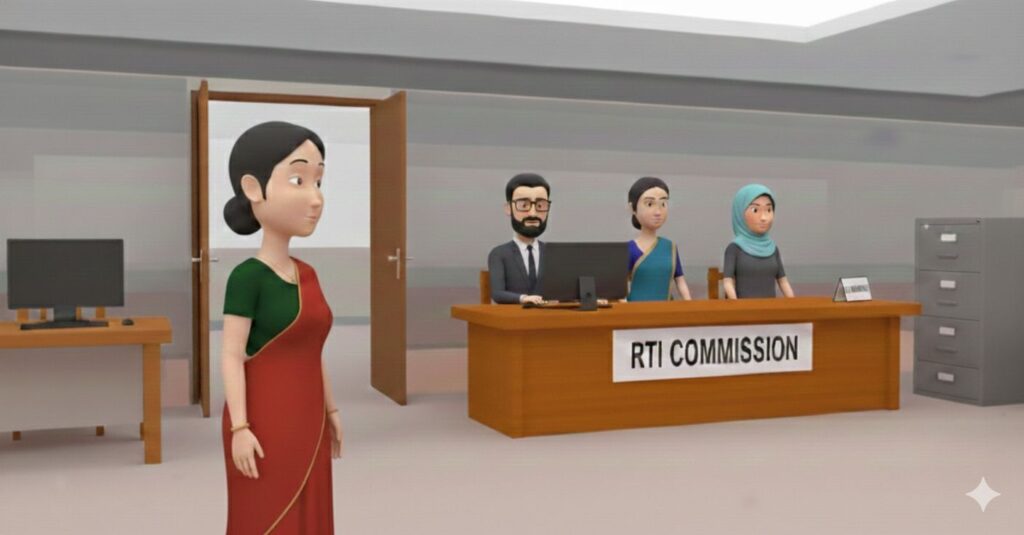
The Right to Information Commission is a body consisting of 5 persons that are recognized for their knowledge, experience and expertise in the fields of governance, public administration, social services, journalism, science and technology or management.
Rooms No 203-204, Block 2,
BMICH, Bauddhaloka Mawatha,
Colombo 07
Email: rti.commission16@gmail.com/info@rtic.gov.lk
Phone: 011 2691625/ 011 2678980
Fax: 011 2691625
DUTIES AND FUNCTIONS
There are certain duties and functions that are to be carried out by the commission as provided in Section 14 of the Act.
Ensuring that Public Authorities perform their duties
It has the duty to ensure that the Public Authorities perform the duties that have been assigned to them. This is to be done by monitoring the performance of these authorities. Also, it can provide general recommendations relating to all public authorities or recommendations to a specific public authority about any changes that can be made.
Specifying Fees
The Commission is responsible for specifying the amount of fees that you have to pay in order to obtain the requested information.
The Commission can specify the information that can be provided Free of Charge.
Publicizing the Requirements and Rights
The requirements under the Act and the Rights of Individuals must be publicized by the Commission.
Training of Public Officials
The Commission must undertake training of Public Officials to ensure that the Right to Information can be exercised without any obstacles.
Issue Guidelines on record management
The Commission also has the duty to issue guidelines to Public Authorities as to how internal records should be kept in a way that is easily accessible.
OBLIGATIONS OF THE COMMITTEE
To provide reasons for decisions
The Commission is required to provide reasons for its decisions in writing to the citizen, information officer and the Public Authority.[ Section 32 (3)].
To prepare reports
The Commission is required to prepare reports of its activities as often as necessary and definitely at least one report per calendar year. Every such report is to be tabled before Parliament and will also be sent to the President. [Section 37 (1)]
To inform a disciplinary authority of relevant matters
The Commission is required to inform to the relevant disciplinary authority, any situation where an Information Officer refuses to receive an application, refuses the required information without reason, and stipulates excessive fees and so on, [Section 38 (1)]
POWERS
When performing the duties and functions, the Commission also has the ability to exercise certain powers as provided in Section 15 of the Act.
To hold inquiries
It has the power to hold inquiries and to require any person to come before the Commission.
This person can be examined by the Commission under oath and be required to produce any information he/she may hold.
To inspect information
It can inspect any information held by a Public Authority, even information that has been denied to a person by the Public Authority under the Act.
To direct publication of information
The Commission can direct the Public Authority to provide the information in a particular form and also to publish any information that has been withheld from the public.
Power to hear appeals
It can hear appeals from a person who has been denied information, given the wrong information, information not provided at the time required by the person, charging excessive fees etc.
Power to direct reimbursement of fees
If the requested information has not been provided by the Public Authority on time, the Commission can direct it to reimburse the fees that had been paid by the citizen.
Power to direct disclosure of third party information
There is also a power vested in the RTI Commission with regard to Third Party Information. When a citizen requests for information that has been supplied by a third party who has refused to allow the information to be disclosed, the Commission may direct the disclosure of such information on behalf of the citizen who is requesting for information.
It can so direct disclosure if there is a greater benefit in disclosing the information than the private interest of non- disclosure.
To make rules
The Commission has the power to make rules under Section 42 (1) on matters relating to
(a) the form and manner in which appeals may be made to the Commission;
(b) the procedure for holding inquiries;
(c ) fee schedule in respect of providing information;
(d) the format of the reports that have to be annually prepared by the Public Authorities and submitted to the Commission [Section 10]
(These reports are to contain information such as the number of requests received during the year, the fees collected during the year, the number of requests rejected, and any suggestions to improve transparency.)
Other Powers
The Commission is also responsible for determining the form in which the reports that are to be published by the Ministers biannually are to be prepared.
ction 14 of the Act.
Ensuring that Public Authorities perform their duties
It has the duty to ensure that the Public Authorities perform the duties that have been assigned to them. This is to be done by monitoring the performance of these authorities. Also, it can provide general recommendations relating to all public authorities or recommendations to a specific public authority about any changes that can be made.
Specifying Fees
The Commission is responsible for specifying the amount of fees that you have to pay in order to obtain the requested information.
The Commission can specify the information that can be provided Free of Charge.
Publicizing the Requirements and Rights
The requirements under the Act and the Rights of Individuals must be publicized by the Commission.
Training of Public Officials
The Commission must undertake training of Public Officials to ensure that the Right to Information can be exercised without any obstacles.
Issue Guidelines on record management
The Commission also has the duty to issue guidelines to Public Authorities as to how internal records should be kept in a way that is easily accessible.